The Bottom Line on Sleep Training

Does your baby need to be rocked to sleep by you or wakes up in the middle of the night demanding a breast, bottle or cuddle before drifting back to sleep? If your little one is at least 4 months old, it may be time to start sleep training.
By that age, babies can, and should, be able to fall asleep or fall back to sleep on their own by self-soothing.
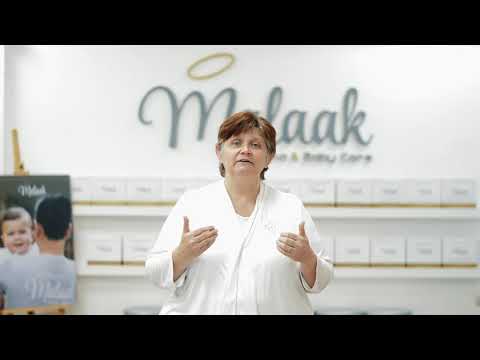
For many parents, the idea of sleep training newborn sounds very daunting so we sat down with Malaak’s Baby Whisperer, Cecile de Scally to get her thoughts.

“Sleep training newborn does not necessarily have to involve tears! Sleep training is all about instilling good habits for your little one teaching them to fall asleep without help. That means baby is put down for bed drowsy but awake, and goes to sleep without being rocked, swayed, cuddled, nursed or shushed. Sleep training teaches your little one how to fall back to sleep when she inevitably does wake up over night which is a normal part of the sleep cycle, even for adults.” Cecile says.
“Sleep helps our baby’s brain mature and studies show that babies who sleep well and have early bedtimes are better emotionally adjusted and have a reduced risk for health problems in the future. For parents as well who are adjusting to their new routines, having well-rested babies who have early bedtimes are also happier, healthier and have more free time. Research has shown that sleep training can have significant improvements in maternal stress, anxiety and depression for parents.”
Many parents, although excited by the idea of getting more sleep, may still be unsure.
“Rest assured that you can still feed your baby once or even twice during the night, depending on the age and stage that your little one is at. We look at your child’s feeding requirements dependent on age and any special conditions and ensure a solid feeding plan that go hand in hand with your little one’s sleeping routine,” says Cecile.
We asked one of our sleep training mamas, Maxine, her feedback on Malaak’s Gentle Sleep Program.
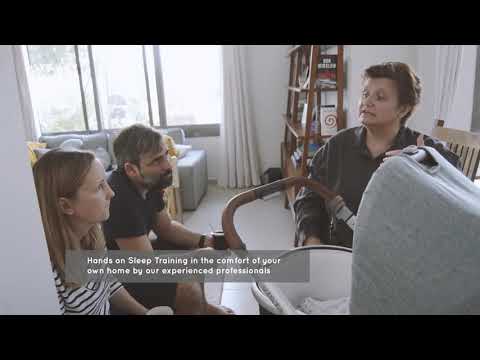
“I was originally unsure about sleep training Hugo as I heard some horror stories about sleep training and I did not have the heart to do it. I realized I needed the guidance of a sleep expert and heard about Cecile de Scally and Malaak’s Gentle Sleep Program through a few sleep forums. After chatting with her I was much more comfortable to give it a try. She set my expectations that my baby won’t be sleeping through the night from the start and that we would work slowly with my child at a pace I felt comfortable with which I was very happy about! Cecile was amazing and spent time understanding my family’s environment, baby’s sleep and feeding routine as well as our sleep objectives. The Childcare Professional she worked with was absolutely incredible as she worked with us for 5 nights to help me get my little one sleeping through the night! We went from 5+ wakeups to zero in only 5 days! It was Life-Changing. I finally feel like myself again.” Maxine said.
How No Deposit Bonuses Became a Staple of Canadian Online Gaming, According to Casizoid
The no deposit bonus has become one of the most recognized features of online casino and poker platforms operating in Canada. What began as a niche acquisition tactic in the early 2000s has since evolved into a structural element of how Canadian players discover, evaluate, and commit to gaming platforms. Understanding how this shift happened requires looking at both the regulatory landscape that shaped Canadian online gambling and the competitive pressures that forced operators to differentiate themselves in an increasingly crowded market.
The Early Landscape of Canadian Online Gambling and Bonus Culture
Canada’s relationship with online gambling has always been defined by legal ambiguity. The Criminal Code of Canada, last significantly amended in 1985, did not anticipate internet-based gaming, which left a grey zone that offshore operators exploited throughout the late 1990s and 2000s. Provincial lottery corporations held monopolies on land-based gaming, but they were slow to move online. This created a window in which international operators, many licensed in Malta, Gibraltar, or Kahnawake, actively competed for Canadian players without facing meaningful domestic enforcement.
In that environment, bonuses became the primary tool for player acquisition. Deposit match bonuses were the first wave, offering players a percentage of their initial deposit as bonus funds. However, the requirement to deposit first created friction, particularly for players unfamiliar with a platform or uncertain about its trustworthiness. The no deposit bonus addressed this directly. By offering a small amount of free credits or free spins without requiring any financial commitment, operators could get skeptical players to engage with their software and game libraries before asking for real money.
Poker rooms were among the earliest adopters of the no deposit model in Canada. The poker boom of 2003 to 2006, driven largely by televised tournaments and the rise of online grinding culture, created enormous demand. Platforms competed intensely for players who had never made an online transaction before, and a no deposit offer — often between $5 and $25 in free tournament tickets or play money — reduced the barrier to entry significantly. By 2007, no deposit bonuses had become a standard feature across poker networks operating in the Canadian market.
Regulatory Changes and the Formalization of Bonus Structures
The regulatory environment in Canada shifted meaningfully in 2021 when Ontario became the first province to open a regulated, competitive online gambling market under iGaming Ontario, a subsidiary of the Alcohol and Gaming Commission of Ontario (AGCO). This framework, which launched in April 2022, required operators to obtain provincial licenses and comply with responsible gambling standards, advertising restrictions, and bonus transparency requirements. The implications for no deposit bonuses were significant.
Under the AGCO’s framework, operators were required to clearly disclose wagering requirements, eligibility conditions, and expiry dates associated with any promotional offer, including no deposit bonuses. This pushed the industry toward greater standardization. Previously, no deposit offers varied wildly in their terms — some carried 40x or 50x wagering requirements that made them practically unredeemable, while others were genuinely accessible. The Ontario regulatory model forced operators to publish these conditions prominently, which had the secondary effect of educating players about what a fair no deposit bonus actually looks like.
Outside Ontario, the grey market continued to operate, but even offshore platforms serving Canadian players began updating their bonus disclosures in response to broader industry norms. Resources that catalog and analyze these offers in detail, such as https://casizoid.org/no-deposit-poker-bonus, reflect how the market has matured — players now expect structured comparisons of wagering requirements, game restrictions, and withdrawal caps before engaging with any no deposit offer. The existence of such resources is itself evidence of how sophisticated the Canadian player base has become.
The AGCO’s approach also influenced how operators structured their no deposit offers technically. Rather than offering free cash with no strings attached, platforms began issuing bonus credits that could only be used on specific games, with winnings held in a separate bonus wallet until wagering thresholds were met. This structure protected operators from bonus abuse while still providing genuine value to new players. By 2023, this tiered bonus wallet model had become the industry standard across both regulated Ontario platforms and offshore sites targeting other Canadian provinces.
Why Poker-Specific No Deposit Bonuses Developed Differently
Casino and poker no deposit bonuses have followed different trajectories, and understanding that distinction matters for Canadian players. In casino contexts, a no deposit bonus typically means free spins on a slot title or a small amount of bonus cash usable across a limited game selection. The house edge on slots makes these offers relatively low-risk for operators, since the statistical probability of a player converting a $10 no deposit bonus into a withdrawable sum is low.
Poker operates on a different mathematical model. Because players compete against each other rather than the house, the operator’s revenue comes from rake — a percentage of each pot or a tournament entry fee. A no deposit poker bonus therefore functions differently: it gives a player enough capital to enter low-stakes games or micro-tournaments, with the operator earning rake on every hand played regardless of outcome. This makes no deposit poker bonuses more sustainable for operators than their casino equivalents, and explains why poker rooms have historically offered them more consistently.
Canadian players gravitated toward poker no deposit offers in particular during the mid-2000s because the poker community had a strong culture of bankroll management and game selection. A player who received $10 in free tournament tickets could, in theory, build a real bankroll through disciplined play. This created a segment of players who genuinely valued no deposit poker bonuses as a starting point rather than a gimmick, and platforms that offered them earned reputational credibility within poker communities on forums like TwoPlusTwo and Reddit’s poker subreddits.
The structure of poker no deposit bonuses also evolved over time. Early offers were often in the form of free tournament entries with fixed buy-ins. Later iterations included free cash usable in cash games, subject to rake-based release schedules — meaning the bonus funds unlocked incrementally as the player generated rake for the platform. This release-on-rake model aligned player and operator incentives more closely and reduced the risk of players withdrawing bonus funds without meaningful engagement. By the time Ontario’s regulated market launched, this structure was already mature and widely understood by experienced Canadian poker players.
The Role of Comparison Platforms and Player Education
One of the less-discussed factors in the normalization of no deposit bonuses in Canada is the rise of affiliate and comparison platforms that independently evaluate these offers. In the early years of online gambling, players had limited ways to assess whether a no deposit bonus was genuinely valuable or a marketing illusion. Word of mouth on forums provided some guidance, but information was fragmented and often outdated.
From roughly 2010 onward, dedicated review and comparison sites began systematically cataloging no deposit offers, documenting wagering requirements, testing withdrawal processes, and publishing player feedback. This created accountability. Platforms with predatory bonus terms — high wagering requirements, narrow game eligibility, short expiry windows — received negative coverage that affected their reputation in the Canadian market. Operators responded by improving their terms to earn favorable reviews, which created a feedback loop that gradually raised the floor on what a legitimate no deposit bonus looked like.
Casizoid is one of the platforms that has contributed to this evaluative ecosystem, particularly in the poker segment of the Canadian market. By focusing on the specific mechanics of poker no deposit offers — including rake release schedules, eligible game types, and withdrawal limits — resources of this kind provide the kind of granular analysis that general casino review sites often skip. This specificity matters because a poker player assessing a no deposit offer needs different information than a slots player would.
The educational function of these platforms also helped Canadian players navigate the transition from grey-market offshore sites to the regulated Ontario environment. Players who had been using no deposit bonuses on unregulated platforms for years needed to understand how the new iGaming Ontario framework changed the rules, which operators had obtained provincial licenses, and whether their existing accounts on offshore platforms remained accessible. Comparison platforms that tracked these developments in real time became genuinely useful resources during the 2022 transition period.
No deposit bonuses in Canada are no longer a novelty or a temporary acquisition tactic — they are a permanent feature of the online gaming landscape, shaped by years of regulatory evolution, competitive pressure, and player education. The shift from opaque, high-wagering promotional offers to structured, transparent bonuses with clear terms reflects a broader maturation of the market. For Canadian players, particularly those in the poker segment, understanding the mechanics behind these offers remains as important as the offers themselves. The history of how no deposit bonuses became standard practice is ultimately a history of how the Canadian online gaming market grew from an unregulated grey zone into a structured, accountable industry — and the bonus structures that survived that transition are the ones that offered genuine value on both sides of the transaction.
The bottom line on sleep training? It is worth doing when parents want to do it and see it as an issue they need help with. If parents have a baby who is waking up four or five times a night, but they’re happy or coping and managing with that then that’s perfectly fine. If lack of sleep is affecting their quality of life, their relationships or mental well-being then it really is worth looking into getting some help.
If you’re ready to start sleep training your newborn and guiding them into a healthier sleep routine, you don’t have to do it alone. Reach out to our team who will be very happy to answer all your questions about our sleep programs, how they work and when is the right time for your little one depending on your baby’s age, personal circumstances, feeding and sleeping routine.
For more information, visit our website or email workshops@malaak.me
Credit Source: https://www.aafp.org/pubs/afp/issues/2016/1101/p750.html
Credit Source: https://www.ncbi.nlm.nih.gov/pmc/articles/PMC3467591/
Most Popular

Doing It All: Lily Kandalaft, Founder Of Malaak Mama And Baby Care
Lily Kandalaft, founder of Malaak. "It was 'mom guilt' that inspired me....

Introducing Bottle-Feedings to Your Breastfed Baby
https://youtu.be/AMWuY1n9dCU As a new parent, you have many important decisions to make.....

Does the working mama balance exist?
Being a mama is a full-time job. Having a job is challenging.....

Baby Blues or Postpartum Depression?
Becoming a new Mama is always a joyous occasion, but the excitement....
The Bottom Line on Sleep Training
Does your baby need to be rocked to sleep by you or....

How much milk does a newborn need in the first few days?
Each baby has different feeding requirements. As the days go by, your....

How can I get my baby to sleep through the night?
Encourage your baby to eat her full meals during the day. Make....

When can my baby start using a pacifier?
If you are breastfeeding, it is advisable to hold off using pacifiers....

When should I give my baby the first bath?
Usually your baby won’t be given a bath straight after she’s born....

How much formula does my baby need?
If your baby isn’t eating solids yet, there’s a rough guide that....

Until your baby is around 6 months old they will get adequate....

How often should you give your baby a bath?
It is really up to you on how often you would like....

Breast pumping will help you share the feeding duties to allow more....

Why does my baby cry all the time?
Your baby may be crying due to the following reasons: He is....

When can my baby start solid food?
You can introduce solids anytime between 4 and 6 months if your....

Breastfeeding is painful! What can I do?
There are a number of reasons for painful feeding. These include swollen....

What is the best sleep routine to use?
When your baby is six weeks old, she may be ready to....

How can I increase my milk supply?
There are a number of ways you can help increase your milk....

How long do I have to breastfeed my baby?
If possible, try to give your baby nothing but breast milk until....

What can I do to help my colicky baby?
Doctors define colic as 3 or more hours a day of continued....

What can I do to prevent SIDS?
Although it still unclear what actually causes sudden infant death syndrome (SIDS)....